



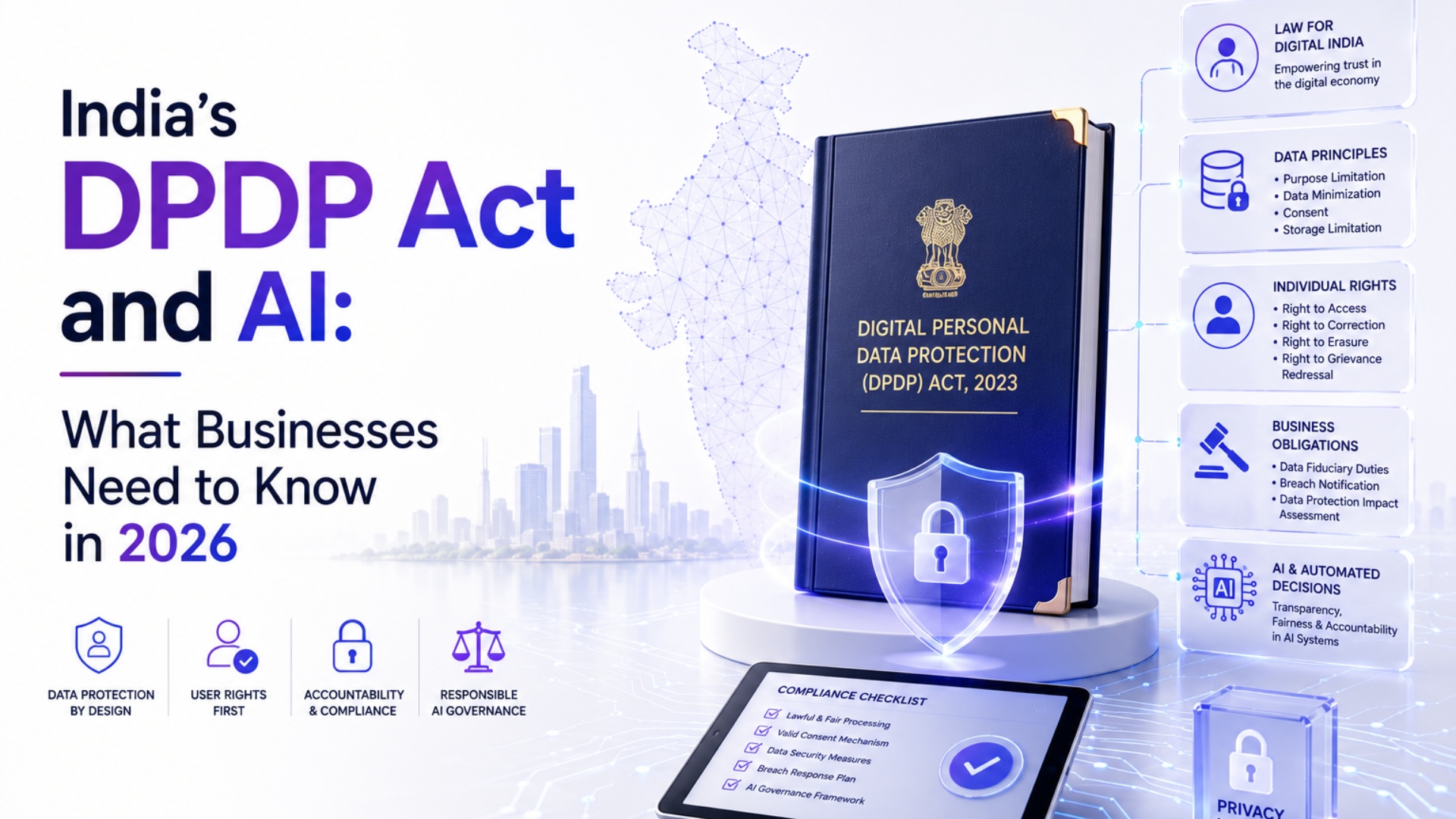
Deploying an AI system that processes customer or employee data in India now means operating under a real regulatory framework, not just internal ethics guidelines. The Digital Personal Data Protection (DPDP) Act, 2023, has direct implications for how AI systems handle personal data — and by 2026, businesses without a clear compliance answer here are taking on real, avoidable risk.
What the DPDP Act Actually Requires
At its core, the DPDP Act governs how organisations collect, process, and store personal data of individuals in India. For AI systems specifically, the relevant obligations include:
Clear, specific consent before personal data is used — including data used to train or fine-tune AI models, not just data used in a single transaction
Purpose limitation — data collected for one stated purpose can't be repurposed for AI model training without fresh consent
Data minimisation — collecting only what's necessary, which cuts directly against the older AI development habit of hoarding as much data as possible "in case it's useful later"
The right to correction and erasure — which creates real technical complications for AI systems, since removing an individual's data from a trained model isn't as simple as deleting a database row
Significant penalties for non-compliance — making this a board-level risk conversation, not just a technical or legal team concern
Why This Is an AI-Specific Problem, Not Just a General Compliance One
Traditional data compliance frameworks were built around discrete transactions — a database record, a form submission. AI systems complicate this because personal data often gets absorbed into a model's training process in ways that are much harder to isolate, audit, or delete after the fact. This is precisely the kind of challenge our existing post, AI Governance Basics: What Every Business Needs to Know Before Deploying AI, addresses at a broader level — the DPDP Act is the specific Indian regulatory teeth behind those general governance principles.
What This Means for AI Professionals, Not Just Legal Teams
This has become a real, practical skill gap. AI Program Managers increasingly need working fluency in what DPDP compliance requires before greenlighting a data pipeline, not just legal teams operating separately from technical teams. This is a core part of what Technovalley's Certified AI Program Manager (C|AIPM) program addresses — AI governance and compliance frameworks aren't treated as a separate legal-only concern but as a program manager's direct responsibility.
For AI engineers and data scientists building the systems themselves, understanding data minimisation and consent-aware pipeline design has become a practical engineering consideration, not an abstract policy topic — one more reason deployment-focused programs like Oracle Data Science Professional increasingly need to be paired with governance literacy.
FAQs
Does the DPDP Act apply to AI systems trained outside India? Generally yes, if the system processes personal data of individuals located in India — the law is based on where the data subject is, not where the processing infrastructure sits.
Is consent required for every AI use case involving personal data? In most cases, yes, with limited exceptions defined in the Act for specific legitimate uses. Blanket, vague consent language is unlikely to hold up as genuinely compliant.
What happens if an AI model was trained on data before the Act's provisions took full effect? This remains a genuinely unsettled area in practice, and organisations are increasingly seeking specific legal guidance on retroactive compliance for already-trained models rather than assuming existing systems are automatically grandfathered in.
Build AI governance literacy into your career. Explore the C|AIPM program or talk to our academic team.
This post is intended as general informational context, not legal advice. Organisations should consult qualified legal counsel for compliance guidance specific to their AI systems.