



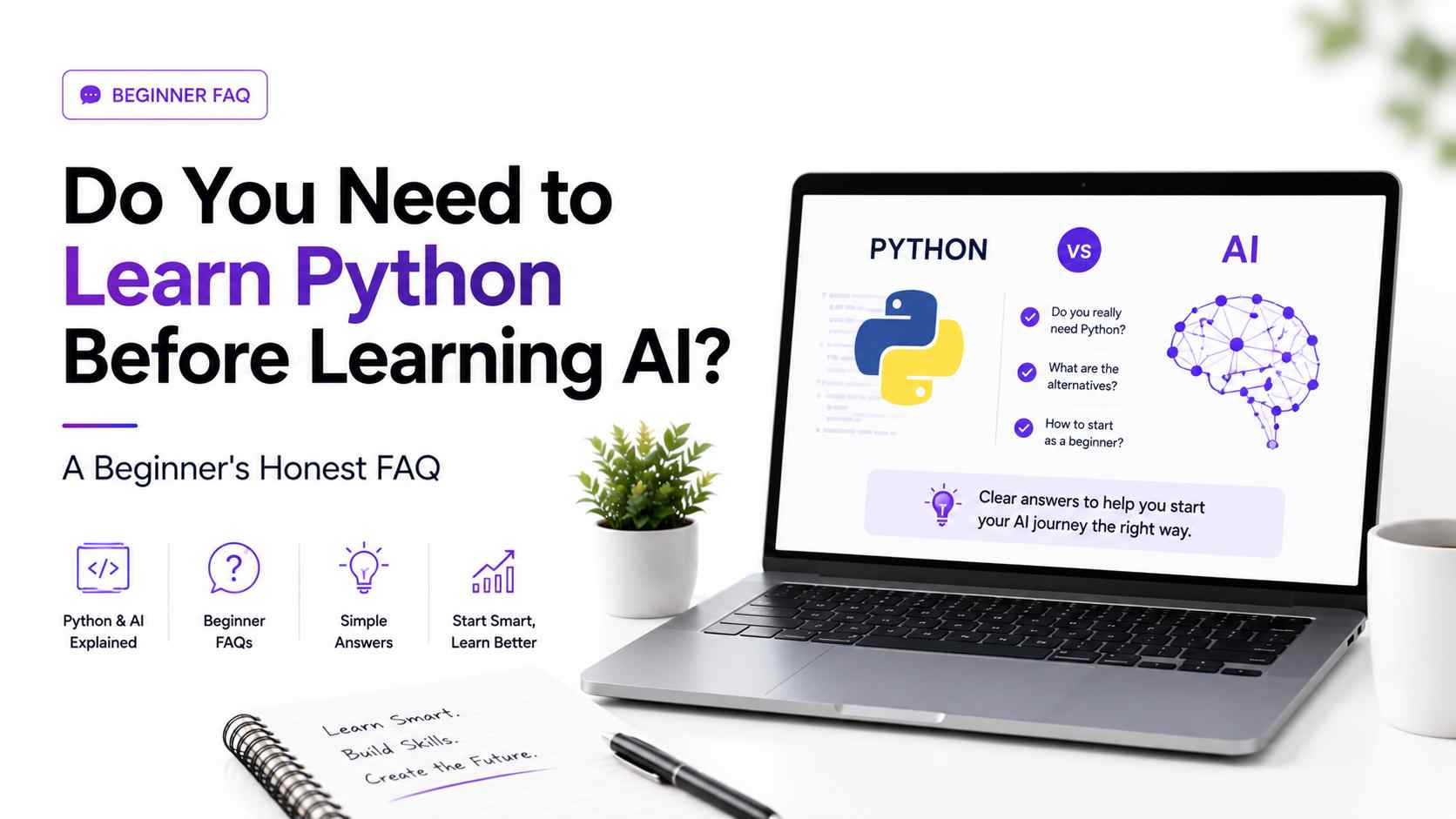
This question stops a lot of genuinely capable people before they even start — and the honest answer is: it depends entirely on which part of AI you're headed toward, not a universal yes or no.
The Roles That Don't Require Python at All
If your target is AI literacy, prompt engineering, AI governance, or AI program management, you can build a complete, credible skill set with zero coding. Technovalley's AI Essentials (AI|E) and Certified AI Program Manager (C|AIPM) programs are both explicitly built for non-technical learners. Our post AI for Non-Tech Graduates: Commerce, Arts & Humanities Career Paths in AI covers this ground in detail — these aren't lesser paths into AI, they're genuinely different, in-demand roles.
The Roles Where Python Is Genuinely Required
If your goal is to build models, deploy LLM applications, or work as a Data Scientist, ML Engineer, or Generative AI Engineer, Python is foundational — not optional, and not something you can skip by relying on no-code tools long-term. Programs like Technovalley Certified Data Scientist and GAIE build Python from the ground up as part of the curriculum, so you don't need prior programming experience before enrolling — but you will be learning and using Python throughout.
A Realistic Sequencing Strategy
For learners genuinely unsure which direction to go, the honest advice is: don't learn Python speculatively before deciding your direction. Instead, start with a program that matches your current best guess about direction, and let the curriculum teach Python as part of a structured path rather than trying to self-teach it in isolation first. Self-taught, undirected Python study is one of the most common ways beginners lose momentum — without a concrete AI project to apply it to, the learning feels abstract and is easy to abandon.
If you're still deciding between a coding-heavy and non-technical path, our post Data Analyst vs Data Scientist vs AI Engineer: Roles, Skills & Salary Compared is a useful next read — it maps exactly which roles require what level of technical depth.
What About SQL and Other "Required" Languages?
SQL is a separate, and in some ways more universally required, skill — even non-technical analytics roles typically need working SQL fluency. This is covered directly in Technovalley's Data Analytics Professional program, built from the ground up for learners without prior technical background.
FAQs
How long does it realistically take to become comfortable with Python for AI work? With structured, project-based learning (rather than self-study alone), most learners reach working competence within 6–8 weeks of consistent practice — faster than most people assume, precisely because it's applied to real projects rather than abstract exercises.
Can I switch from a non-technical AI path to a technical one later? Yes, and it's a common, sensible progression — many learners start with AI|E for literacy, then move into a technical program like GAIE or Certified Data Scientist once they've confirmed genuine interest in building, not just using, AI systems.
Is Python the only programming language relevant to AI? It's by far the dominant one for AI/ML work currently, though SQL (for data work) and some familiarity with cloud/deployment tooling round out a fuller technical AI skill set.
Not sure which path fits your background? Talk to Technovalley's academic team or browse programs for every starting point.